About the Session
Medical imaging and clinical care generate complementary but often siloed data. Imaging systems produce rich DICOM metadata, while EHRs capture diagnoses, labs, procedures, and outcomes that provide essential clinical context. For attendees involved in imaging research, analytics, or AI development, bridging these data sources is critical to enabling scalable, reproducible multimodal research across institutions. This session addresses the growing need to harmonize imaging and clinical data using the OMOP Common Data Model, including recent extensions that support DICOM attributes.
Participants will learn how integrating DICOM metadata with OMOP-standardized clinical data enables more robust cohort discovery and cross-site validation. Through a practical lung nodule segmentation use case, attendees will see how imaging attributes and EHR data work together to define research-ready cohorts. The session walks through how to select relevant DICOM metadata, align it with clinical variables, and apply consistent criteria that support reproducible analysis and multi-institutional studies.
By the end of the session, attendees will leave with a clearer understanding of how to operationalize multimodal data for research and AI validation. Participants will gain insight into real-world implementation considerations, including metadata extraction, transformation, and loading workflows, and how imaging metadata relates to tabular EHR data within OMOP. The focus is on practical takeaways that attendees can apply to their own enterprise imaging, research, and standards-based initiatives.
Objectives
- Describe the value and benefits of integrating DICOM metadata with clinical data in the OMOP Common Data Model for reproducible multimodal research.
- Identify key implementation steps, including metadata extraction, transformation, and loading (ETL), and explain the relationship between imaging metadata and EHR tabular data.
- Implement clinical phenotypes for research use cases by incorporating imaging attributes alongside EHR clinical data, including findings from images and reports.
Presented By
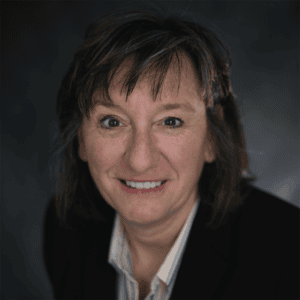

Blake Dewey, PhD, MSE
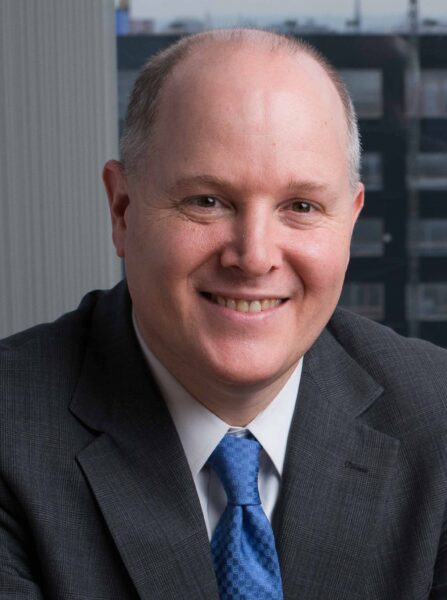
Paul Nagy, PhD, CIIP, FSIIM