
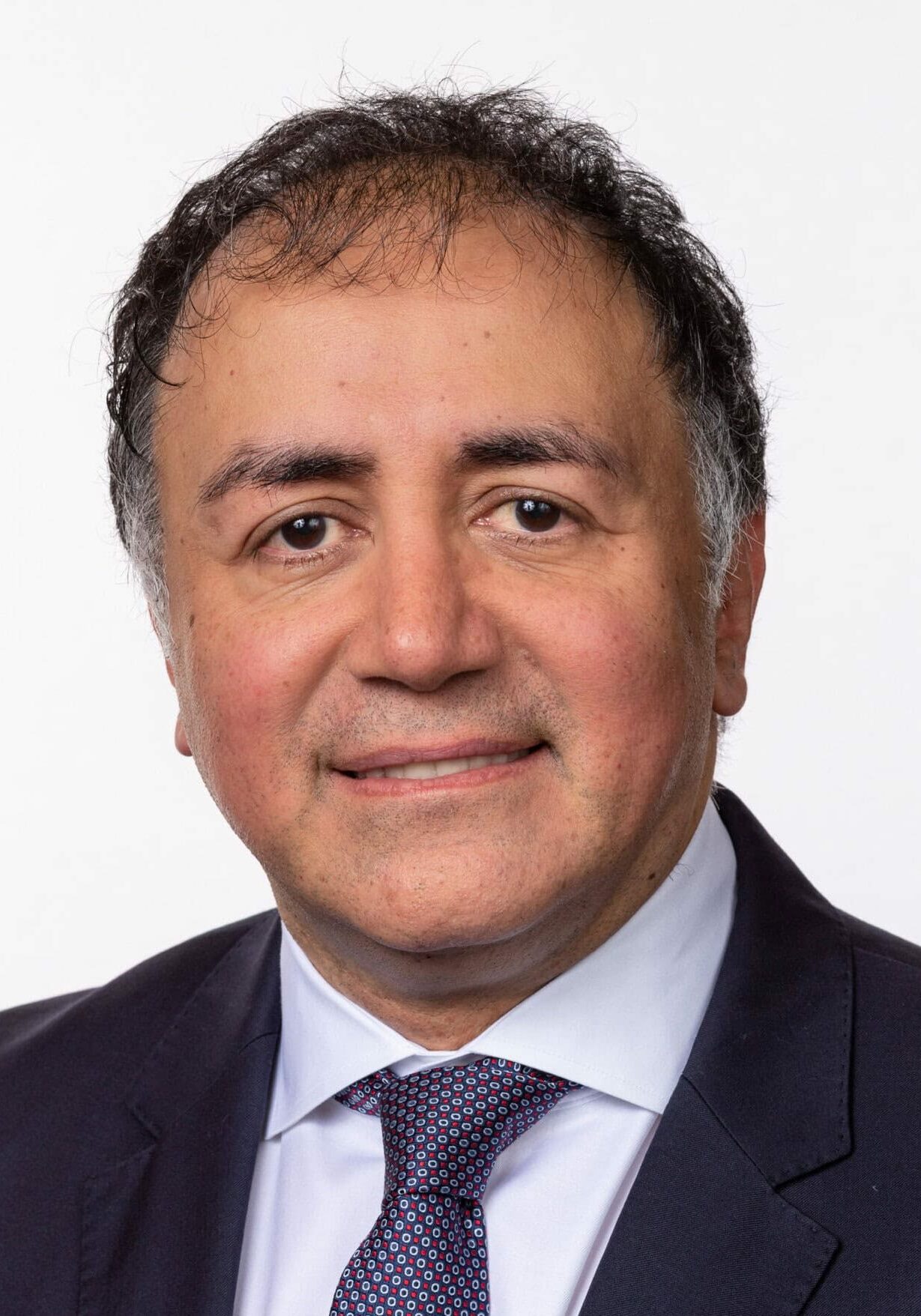
Event Speaker
Reza Forghani, MD, PhD
Dr. Reza Forghani is a neuro and head and neck radiologist and clinician scientist with medical AI expertise. He completed his MD and PhD degrees at McGill University, with a PhD in molecular and cell biology. After completing his Diagnostic Radiology Residency at McGill University in 2008, he completed a Diagnostic Neuroradiology Fellowship at the Massachusetts General Hospital, Harvard Medical School. He is currently Professor of Radiology & Artificial Intelligence (AI) and Vice Chair of AI at the Department of Radiology, University of Florida College of Medicine where he is also the founder and director of the Radiomics & Augmented Intelligence Laboratory (RAIL) at the Norman Fixel Institute for Neurological Diseases. Dr. Forghani’s area of scientific interest is translational multi-modal AI, with the use of medical imaging for clinically impactful AI algorithm development. This includes specific interest in AI applications in head & neck and neuro imaging. Another core activity of the RAIL lab is to use clinical domain expertise to help translation and adoption of medical AI algorithms, working across different disciplines and with industry partners with the aim of developing clinically impactful AI tools that have the highest likelihood of adoption, so that they can be brought into clinical practice to impact every patient’s journey in the healthcare enterprise. Lastly, Dr. Forghani is also an expert in spectral imaging and the RAIL lab is involved both in research projects and academic-industry collaboration in peer-to-peer education for adoption of spectral CT.
Sessions